Table of Contents
- Introduction
- What Is a Multi Play Station?
- What Is a Junior Play Station?
- Multi Play Station vs Junior Play Station: Key Differences
- Comparison of Space, Age Group, Features, and Usage
- Which Playground Equipment Is Best for Toddlers and Younger Children?
- Which Option Is Better for Larger Apartment Complexes?
- Safety, Accessibility, and Supervision Considerations
- Installation Space and Maintenance Requirements
- Budget and Long-Term Value
- How to Select the Right Play Station for Your Project
- Frequently Asked Questions
- Conclusion
Introduction
When planning playground equipment for kids, two terms often come up: multi play station and junior play station. Both can work well, but they serve different needs. This guide, from the perspective of Quality Fiber and Plastic Products, explains how they differ so apartment associations, builders, schools and parents can compare options sensibly. We do not assume specific dimensions or features, since these vary by product.
What Is a Multi Play Station?
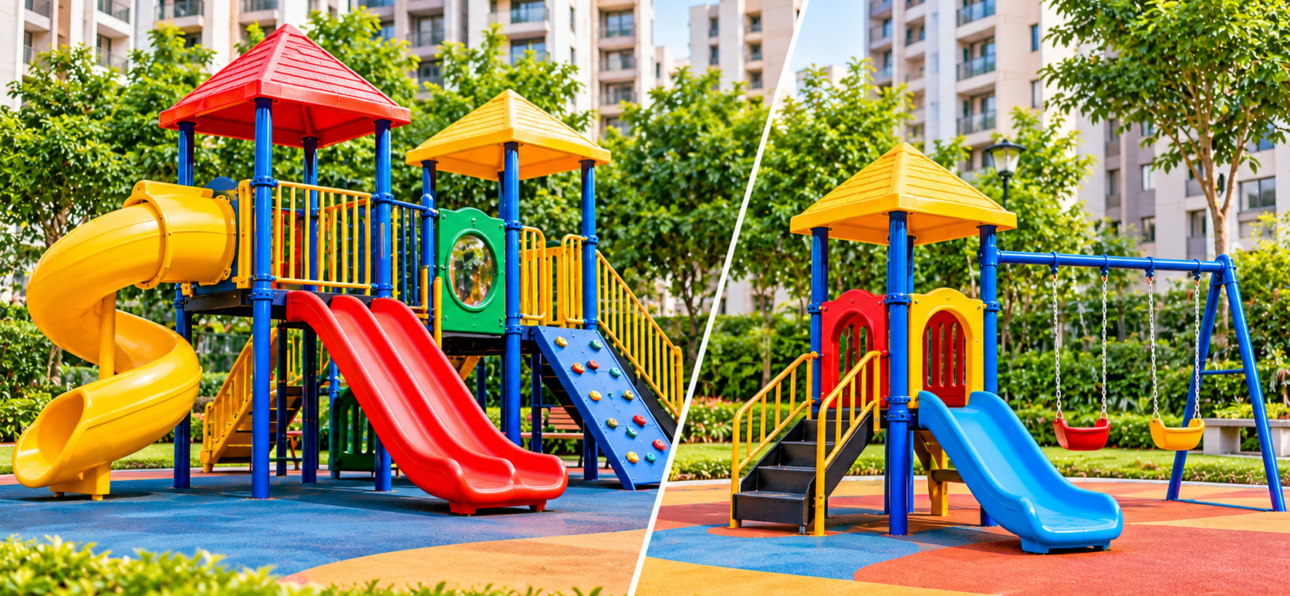
A multi play station is a larger play unit that brings several activities together in one structure. Depending on the design, it may combine elements such as slides and climbing features, along with other play activities. A multi play system for apartments can give children varied options in one footprint, which suits communities wanting variety.
What Is a Junior Play Station?
A junior play station is a compact, junior-oriented unit with simpler, age-appropriate activities. It is typically intended for younger children, as specified by the manufacturer. Because of its smaller size, it is often considered for areas where space is limited or where a dedicated zone for young children is needed.
Multi Play Station vs Junior Play Station: Key Differences
The main differences are scale, activity variety and intended users:
- Scale: Multi units are generally larger. Junior units are more compact.
- Variety: Multi units may combine more activities. Junior units usually focus on simpler play.
- Users: Junior units are designed for younger children, while multi units may serve a broader range depending on design.
These are general patterns. Check each product’s specifications.
Comparison of Space, Age Group, Features, and Usage
Comparison Factor | Multi Play Station | Junior Play Station |
Typical design | Multiple integrated play activities | Compact, junior-oriented play activities |
Space requirements | Depends on configuration; often needs a larger footprint | Often suited to smaller play areas |
Intended age group | Depends on the manufacturer’s specifications | Designed for younger children when specified by the manufacturer |
Play activities | May combine slides, climbing, and other activities | May focus on simpler, age-appropriate play activities |
Installation | Requires space planning and suitable safety zones | Requires suitable placement and safety clearance |
Maintenance | Depends on materials, components, and usage | Depends on materials, components, and usage |
Best suited for | Communities needing varied play options | Smaller areas or play spaces serving younger children |
Which Playground Equipment Is Best for Toddlers and Younger Children?
For play equipment for toddlers and younger children, look for units that the manufacturer specifies for that age group. Features to consider include lower heights, simple activities and rounded, secure designs. Junior play stations are generally aimed at this group, but confirm the stated age range. Younger children need close adult supervision whichever unit is used.
Which Option Is Better for Larger Apartment Complexes?
Larger communities often have children of many ages and more available space. A multi play station can offer variety, while a junior unit can provide a dedicated, safer-feeling zone for younger children. Many communities use both. Neither is universally better, so the best approach depends on resident demographics, area and budget.
Safety, Accessibility, and Supervision Considerations
Whichever you choose:
- Follow the manufacturer-specified age limits
- Maintain required fall zones and clearances
- Use impact-absorbing surfaces beneath equipment
- Ensure stable installation with secure foundations
- Keep play areas visible for adult supervision
- Consider access routes and inclusive play where possible
Do not assume one option is safer than the other. Safety depends on design, installation, surfacing, upkeep and supervision.
Installation Space and Maintenance Requirements
Measure your site before selecting a unit. Confirm the footprint, height and safety zone with the supplier. Check drainage, shade and surface condition.
Maintenance needs depend on materials, components and usage. Plan for regular inspections, cleaning and replacement of worn parts, and keep a record of checks. No playground equipment is maintenance-free.
Budget and Long-Term Value
Consider more than the initial cost:
- Equipment, surfacing and installation
- Ongoing inspection and repairs
- Durability under outdoor conditions
- Spare parts and after-sales support
A lower-cost unit that does not suit your children’s ages or space may offer less value than a well-matched one. Request a written quotation based on product specifications.
How to Select the Right Play Station for Your Project
- Identify the age groups that will use the area
- Measure the available space and safety zones
- Decide how much variety of activity is needed
- Review product specifications, materials and age guidance
- Check installation requirements and surfacing
- Plan maintenance and supervision
- Compare playground equipment suppliers in Bangalore on documentation and support
Frequently Asked Questions
- What is the difference between a multi play station and a junior play station? A multi play station combines several activities in one larger unit, while a junior play station is typically compact and designed for younger children. Details vary by product.
- Which play station is better for a small apartment complex? It depends on the space and the children’s ages. A junior unit may suit a small area with younger children, but check the footprint and clearance of any option.
- Which play station is suitable for younger children? Choose a unit that the manufacturer specifies for the child’s age group. Junior play stations are generally intended for younger children, with adult supervision.
- How much space is required for a multi play station? It depends on the configuration and the safety zone the manufacturer specifies. Confirm the dimensions and clearance from product specifications.
- How can I choose the right playground equipment for my project? Match equipment to children’s ages, available space, safety needs and upkeep, and verify specifications with the supplier.
Conclusion
A multi play station and a junior play station serve different needs, and neither is universally better. The right choice depends on children’s ages, space, safety requirements and how the area will be used.
To explore suitable options for your project, you can contact Quality Fiber and Plastic Products for product information and confirm specifications before deciding.